Experience Goal Deep Dive
목표 보존형 Agentic Orchestration의 이론, 계약, 효과, 평가
문서 역할
프로젝트 변화와 AS-IS/TO-BE를 먼저 이해하려면 Experience Goal: 명령 수행에서 결과 위임으로를 본다. 이 문서는 그 구조를 형식 모델, 외부 이론, 연구 가설과 평가 설계로 확장하는 학술 근거 문서다.
Experience Goal은 사용자의 한 문장을 더 많은 명령으로 확장하는 기능이 아니다. 여러 Agent, 기기 step, 대기 구간, callback을 통과하는 동안 사용자가 기대한 결과가 무엇인지, 어떤 관찰이 성공을 입증하는지, 언제 계속·질문·재계획·종료할지를 보존하는 상위 orchestration 계약이다.
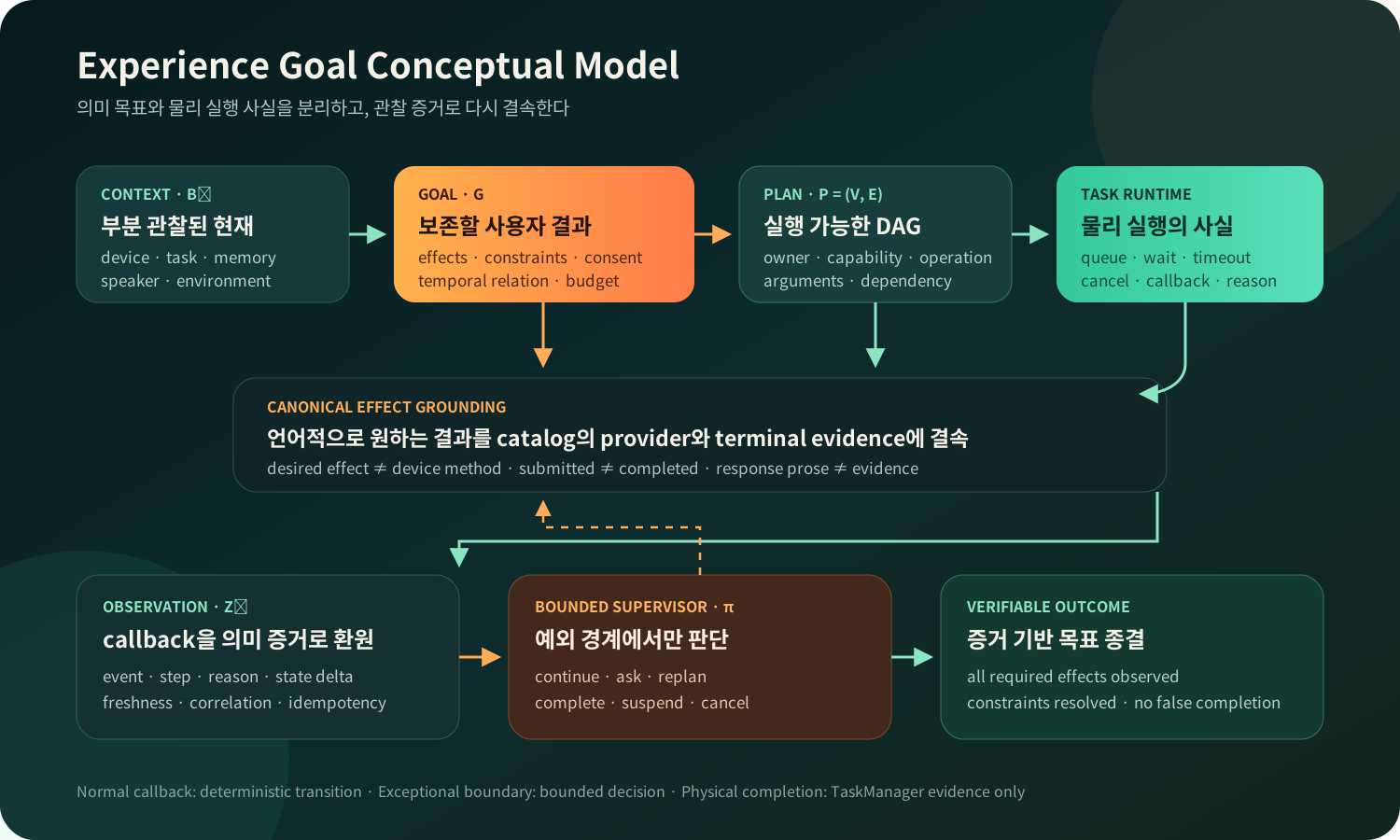
핵심 명제:
Goal은 자연어 명령의 복사본이 아니고,Plan은 Goal 자체가 아니며,Task callback은 단순 진행률이 아니다. 이 세 요소를 분리하고 다시 결속해야 장시간·복합·조건부 경험을 안전하게 운영할 수 있다.
초록
현재의 음성 Agent는 단일 turn에서 family와 skill을 선택하거나 한 개의 기기 명령을 실행하는 데에는 강하다. 그러나 "편하게 쉬게 도와줘", "청정이 끝나면 오늘 뉴스를 요약해줘", "주방에 갔다가 상태가 괜찮으면 바이탈사인을 시작해줘"처럼 결과 위임, 시간 관계, 상태 관찰, 여러 provider가 결합된 요청에서는 단일 intent 분류만으로 충분하지 않다.
이 문서는 SK-Intellix A2A 시스템에 추가된 Experience Goal을 다음과 같이 정의한다.
- Main Router와 Planner가 만든 owner·skill·typed step을 실행의 유일한 원천으로 유지한다.
- Planner와 같은 structured output에서 goal 의미 증거를 sidecar로 수집한다.
- deterministic admission과 canonical effect catalog로 false activation과 임의 capability 생성을 차단한다.
- DeviceAgent TaskManager callback을 관찰 증거로 변환해 목표 상태를 갱신한다.
- 정상 진행은 규칙 기반 state transition으로 처리하고, 실패·모순·사용자 입력이 필요한 경계에서만 bounded Supervisor 판단을 연다.
따라서 Experience Goal의 연구적 의의는 "LLM이 더 많은 행동을 생성한다"가 아니라, 의미 목표, 실행 계획, 물리 실행 사실을 서로 다른 권한 계층으로 분리하면서도 긴 경험의 연속성을 유지하는 구조에 있다.
1. 연구 문제
1.1 단일 intent가 잃어버리는 정보
전통적인 음성 명령 처리 흐름은 대체로 다음과 같다.
utterance -> intent -> slot -> API call -> response
이 구조는 "주방으로 가", "청정 켜줘", "오늘 날씨 알려줘"에는 적합하다. 그러나 아래 요청은 한 개 intent로 축약하는 순간 중요한 의미를 잃는다.
"청정이 끝나면 오늘 뉴스를 짧게 알려줘."
이 발화에는 최소 다섯 종류의 정보가 있다.
| 의미 | 예시 | 손실될 때의 문제 |
|---|---|---|
| 상위 결과 | 청정 이후 최신 정보 전달 | 첫 step만 끝나고 전체 요청을 완료 처리 |
| 시간 관계 | after_existing_event |
Cloud가 polling하거나 즉시 다음 step 실행 |
| provider 경계 | ODL -> FRG -> DEF | 한 family가 모든 행동을 임의로 담당 |
| 완료 증거 | 청정 완료 callback, 정보 전달 완료 | TTS 약속만 하고 실제 결과 미완료 |
| 사용자 경험 | 기다린 뒤 자연스럽게 이어 말하기 | callback 이후 문맥이 사라짐 |
Experience Goal은 이 손실을 막기 위한 계층이다.
1.2 해결하려는 세 가지 단절
의미 단절
Planner가 만든 각 step은 실행에는 충분하지만, 여러 step이 왜 하나의 경험인지 설명하지 못할 수 있다.
시간 단절
장시간 작업은 음성 session보다 오래 지속된다. session이 끝난 뒤에도 목표는 유지되어야 한다.
증거 단절
LLM이 "완료했습니다"라고 생성한 문장은 물리적 완료 증거가 아니다. 성공 판정은 TaskManager callback과 context observation에 연결되어야 한다.
1.3 연구 질문
이 설계는 다음 연구 질문을 다룬다.
| ID | 연구 질문 |
|---|---|
| RQ1 | 자연어 요청 중 어떤 요청만 장기 목표로 입장시켜야 하는가? |
| RQ2 | LLM의 의미 해석과 기기 capability의 실행 가능성을 어떻게 분리해 결속할 것인가? |
| RQ3 | 정상 callback은 저비용으로 처리하면서 어떤 경계에서만 재추론할 것인가? |
| RQ4 | Experience 계층이 기존 Planner 정확도와 지연을 해치지 않았음을 어떻게 입증할 것인가? |
| RQ5 | 사용자 관점의 연속성·신뢰성과 시스템 관점의 성공률·복구율을 함께 어떻게 측정할 것인가? |
2. 핵심 개념과 형식 모델
Experience Goal은 BDI, Goal Reasoning, HTN, affordance grounding, mixed-initiative, autonomic control에서 개념적 렌즈를 가져오지만 어느 한 이론을 그대로 구현한 시스템은 아니다. 현재 구현을 설명하기 위한 최소 형식 모델은 다음과 같다.
2.1 Context: 관찰된 현재 상태
시점 t의 context를 다음처럼 본다.
B_t = <D_t, T_t, M_t, S_t, E_t>
| 기호 | 의미 | 예시 |
|---|---|---|
D_t |
device state | 위치, 도킹, 배터리, 청정, 공기질 |
T_t |
task state | active workflow, current step, recent event |
M_t |
memory state | 직전 대화, 사용자 선호, session summary |
S_t |
speaker/session state | 화자, voice session, consent owner |
E_t |
environment evidence | 사람이 개입했는지, 센서·앱 결과 |
B_t는 완전한 세계 상태가 아니다. source, freshness, availability를 가진
부분 관찰 snapshot이다. 따라서 context가 비어 있거나 오래됐을 때는 추정이
아니라 질문, 보류, 안전 종료가 필요하다.
2.2 Goal: 보존할 사용자 결과
Experience Goal G를 다음 tuple로 정의한다.
G = <g_id, summary, effects, constraints, temporal, consent, budget>
| 필드 | 설명 |
|---|---|
g_id |
callback과 workflow를 결속하는 안정적 식별자 |
summary |
사용자 결과를 짧게 표현한 의미 요약 |
effects |
성공 시 관찰되어야 할 canonical desired effect |
constraints |
금지 조건, 순서, privacy, safety, 사용자 범위 |
temporal |
앞 step, 기존 event, 절대·상대 시간과의 관계 |
consent |
자동 실행, 확인 필요, 사용자가 직접 끝내야 하는 경계 |
budget |
최대 판단 횟수, 재계획 횟수, 시간·token 한도 |
Goal은 발화 문자열을 저장한 객체가 아니다. 발화가 여러 번 바뀌어도 보존되어야 할 결과와 성공 조건을 표현한다.
2.3 Plan: 실행 가능한 typed DAG
Planner가 만드는 plan을 directed acyclic graph로 본다.
P = (V, E)

V_i = <step_id, owner, capability, operation, args, wait_policy>
E_ij = dependency(V_i, V_j)
V는 실행 가능한 typed step 집합이다.E는 순서와 의존관계다.- action은 catalog에 존재하는 capability와 operation으로 grounding되어야 한다.
- Experience Goal은
V를 임의로 생성하지 않는다.
2.4 Effect: 행동이 아니라 관찰 가능한 결과
Effect e는 "무엇을 호출할지"가 아니라 "호출 결과로 무엇이 참이 되어야 하는지"다.
e = <effect_id, provider, terminal_evidence, confidence_policy>
예를 들어:
action: setMoveTo(room="주방")
effect: target_location_reached
evidence: movement.arrived + resolved room identity
action: startBasicAirClear(...)
effect: air_cleaning_active
evidence: cleaning.started 또는 cleaning.is_running=true
이 구분이 없으면 "명령 제출 성공"을 "사용자 목표 달성"으로 잘못 판단한다.
2.5 Observation: callback을 의미 증거로 변환
TaskManager event와 context update를 관찰 Z_t로 표현한다.
Z_t = <event, workflow_id, step_id, reason, state_delta, freshness>
Observation은 다음 중 하나를 입증한다.
- step이 시작됨
- step이 진행 중임
- step이 완료됨
- desired effect가 관찰됨
- 실패·timeout·차단이 발생함
- 사용자의 직접 입력이나 consent가 필요함
- 기존 plan과 현재 현실이 모순됨
2.6 Supervisor: 제한된 목표 상태 전이
Supervisor 정책은 다음처럼 표현할 수 있다.
pi(G, B_t, P, Z_t, budget)
  -> {continue, ask, replan, complete, suspend, cancel}
여기서 중요한 제한은 pi가 매 progress event마다 LLM을 호출하는 자유로운
Agent loop가 아니라는 점이다.
normal event
  -> deterministic state transition

failed / blocked / timeout / semantic contradiction / user input
  -> bounded decision gate
3. Goal, Plan, Task, Response를 분리해야 하는 이유
| 객체 | 답하는 질문 | 소유 계층 | 잘못 합쳤을 때 |
|---|---|---|---|
| Goal | 왜 수행하며 무엇이 성공인가? | Experience sidecar | 명령 하나가 끝나면 전체 목표 완료 |
| Plan | 무엇을 어떤 순서로 수행하는가? | Main Planner | Supervisor가 두 번째 Planner로 팽창 |
| Task | 지금 실제로 무엇이 실행 중인가? | DeviceAgent TaskManager | Cloud가 물리 상태를 추측 |
| Response | 사용자에게 무엇을 말할 것인가? | owner Agent / response composer | TTS 약속을 실행 증거로 오인 |
3.1 Goal은 Command가 아니다
"잠깐 편하게 쉬게 도와줘"
이 문장은 직접 capability 이름을 포함하지 않는다. 그러나 가능한 goal은
restful_environment_supported처럼 표현될 수 있다. 실제 plan은 기기 상태,
사용자 동의, capability availability에 따라 달라진다.
3.2 Plan은 Runtime state가 아니다
step_clean이 plan에 있다는 사실은 청정이 실행 중이라는 뜻이 아니다. queue에
대기 중일 수도 있고, 사용자가 PUI로 취소했거나, 이전 movement가 완료되지 않아
blocked 상태일 수도 있다.
3.3 Response는 Evidence가 아니다
"요청하신 작업을 순서대로 수행할게요"는 acknowledgement일 뿐이다.
WORKFLOW_COMPLETED와 terminal effect evidence가 없으면 목표는 완료되지 않았다.
4. 전체 아키텍처
User utterance
  -> Main Router / Planner
     - owner_selection
     - typed steps
     - experience_request sidecar
  -> deterministic admission
  -> effect/provider grounding
  -> Goal contract + plan binding
  -> existing TaskManager compiler
  -> On-device bridge
  -> DeviceAgent TaskManager
  -> executor / Android / robot function
  -> callback + context observation
  -> workflow state reducer
  -> effect evaluator
  -> deterministic continue OR bounded Supervisor decision
  -> user response / next step / complete
4.1 권한 경계
| 계층 | 허용 | 금지 |
|---|---|---|
| Main Router | family, owner, skill, plan 의미 결정 | 직접 device method 호출 |
| Experience admission | 목표 입장·거절, effect 결속 | 새로운 typed action 합성 |
| Effect catalog | capability 결과와 effect 연결 | 발화별 문자열 매칭으로 API 선택 |
| TaskManager compiler | 검증된 step을 task/workflow 계약으로 변환 | 사용자 목표 의미 재해석 |
| DeviceAgent TaskManager | queue, dependency, timeout, callback | 자연어 목표 재작성 |
| Supervisor | 예외 경계에서 continue/ask/replan/complete 판단 | 정상 progress마다 자유 추론 |
이 분리는 안전장치이자 성능 최적화다.
5. Admission: 어떤 요청을 Experience로 승격할 것인가
Experience Goal의 가장 중요한 성능은 많이 입장시키는 것이 아니라 필요한 요청만 입장시키는 것이다.
5.1 의미 증거
입장 후보는 다음 의미 축을 조합해 판단한다.
| 축 | 질문 |
|---|---|
| delegated outcome | 사용자가 결과 달성을 시스템에 위임했는가? |
| multi-step coordination | 여러 step이나 provider 사이 결속이 필요한가? |
| temporal dependency | 이후, 완료 후, 일정 시간 뒤 같은 관계가 있는가? |
| observation need | 중간 상태나 외부 event를 기다려야 하는가? |
| persistent objective | 음성 session 이후에도 목표를 보존해야 하는가? |
| consent boundary | 자동 진행 전에 확인이 필요한 side effect가 있는가? |
단순히 문장이 길거나 "도와줘"라는 단어가 있다는 이유로 입장시키지 않는다.
5.2 입장 상태
not_admitted
  = 일반 대화 또는 단일 명령으로 충분

candidate
  = 의미 증거는 있으나 grounding·consent·plan binding 검증 전

activated
  = effect provider와 typed step, 시간 관계, 실행 tier 검증 완료

blocked
  = 목표는 유효하지만 현재 실행 조건 미충족
5.3 Negative boundary
아래 요청은 기본적으로 Experience가 아니다.
| 요청 | 이유 |
|---|---|
| "안녕" | 즉시 DEF 응답으로 완결 |
| "주방으로 가" | 단일 ODL action으로 충분 |
| "배터리 괜찮아?" | 현재 context 질의로 완결 |
| "이재명 대통령 이번 주 활동 알려줘" | FRG 조회와 답변 composition으로 완결 |
| "설정 부탁해" | route·slot clarification 문제이지 장기 목표가 아님 |
Experience는 기존 family 경계의 오류를 감추는 fallback이 아니다.
6. Goal lifecycle
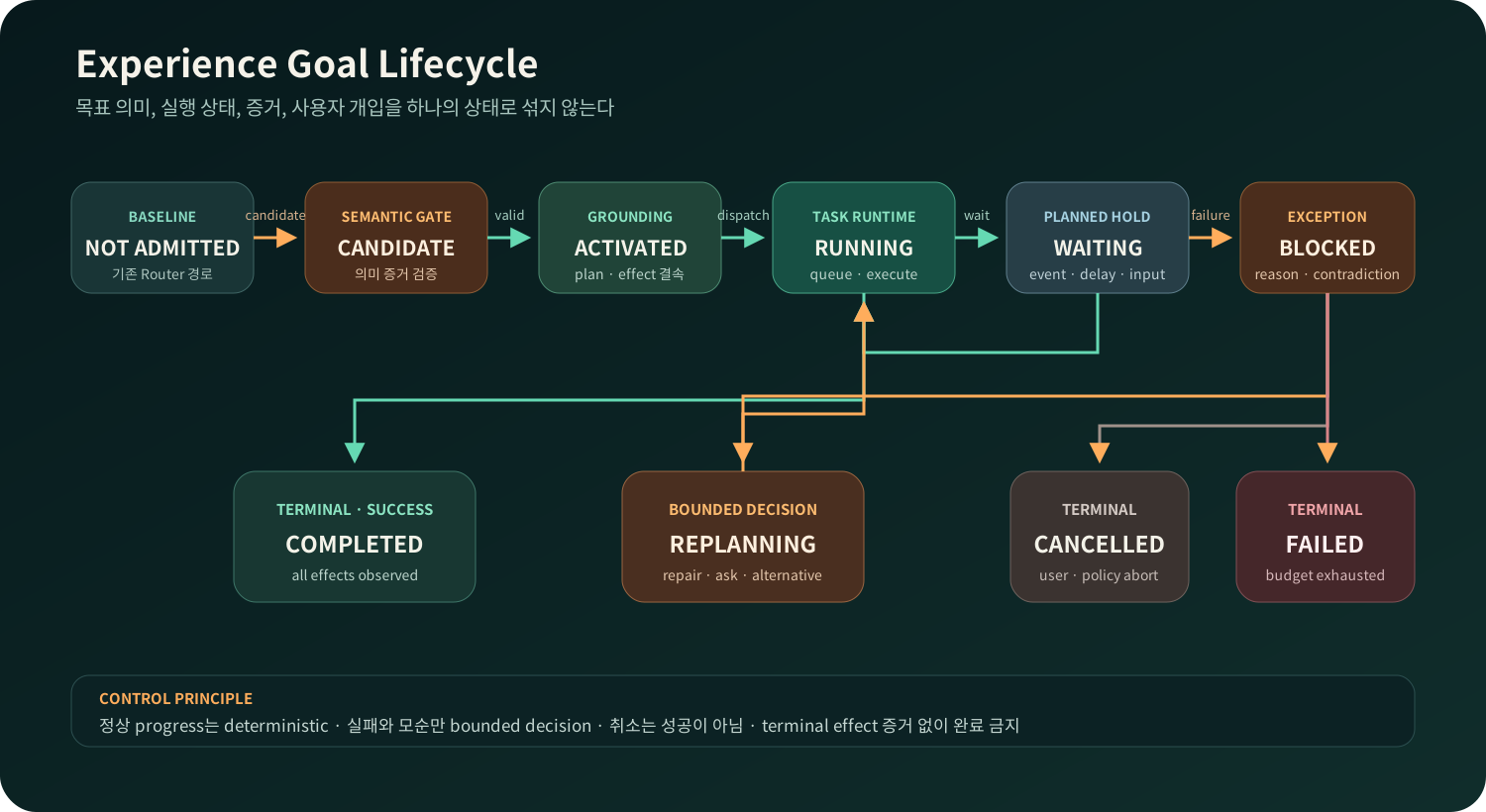
Experience Goal의 lifecycle은 BDI goal lifecycle에서 제시하는 pending, active, suspended, terminal 관점을 참고하되 현재 시스템의 execution boundary에 맞춰 축소·재정의한다.
| 상태 | 의미 | 진입 조건 | 이탈 조건 |
|---|---|---|---|
not_admitted |
Experience 대상 아님 | 일반 turn | 기존 Router로 종료 |
candidate |
목표 의미 후보 | delegated outcome 등 의미 증거 | grounding 성공 또는 reject |
activated |
plan과 effect 결속 완료 | provider, temporal, consent 검증 | task 제출 또는 block |
running |
하나 이상의 step 실행 중 | TaskManager accepted/started | completed, wait, failed |
waiting |
event·delay·사용자 입력 대기 | wait policy 충족 | trigger, consent, timeout |
blocked |
현재 plan을 계속할 수 없음 | failure, condition false | retry, replan, cancel |
replanning |
제한된 대안 계획 판단 | decision gate 승인 | 새 plan binding 또는 종료 |
completed |
모든 terminal effect 증거 충족 | effect closure | terminal |
cancelled |
사용자 또는 정책이 중단 | cancel/abort | terminal |
failed |
예산 내 복구 불가 | terminal reason | terminal |
6.1 Suspend와 wait의 차이
waiting은 계획된 시간·event·사용자 입력을 기다리는 정상 상태다.suspended에 해당하는 운영 의미는 voice session의 PAUSE, PUI 개입, 안전 정책 차단처럼 외부 이유로 실행을 멈추되 goal을 유지하는 경우다.- 단순히 callback이 늦다는 이유로 goal을 매번 재계획하지 않는다.
6.2 성공 판정
Goal completed
  iff
  all required effects have acceptable terminal evidence
  AND no unresolved mandatory constraint remains
Task 제출 성공, TTS acknowledgement, 마지막 step의 시작 event만으로는 완료가 아니다.
7. Effect grounding
7.1 왜 canonical effect catalog가 필요한가
LLM은 "편안한 환경", "공기가 좋아짐", "원하는 장소에 도착" 같은 결과를 자연스럽게 표현할 수 있다. 하지만 그 표현을 곧바로 device method로 변환하면 hallucinated capability가 생긴다.
canonical effect catalog는 다음 mapping을 제공한다.
(capability_id, operation_id)
  -> canonical effect
  -> terminal evidence policy
현재 구현에는 15개 canonical effect, 10개 capability provider, 3개 skill provider가 등록되어 있다.
| effect 범주 | 예시 |
|---|---|
| 환경 관찰 | air_quality_observed, battery_state_observed |
| 기기 상태 변화 | air_cleaning_active, air_cleaning_stopped |
| 이동 결과 | target_location_reached, station_reached |
| 경험 결과 | supportive_conversation_delivered, rest_guidance_delivered |
| 정보 결과 | fresh_information_delivered |
| 장기 상호작용 | vital_interaction_ended, story_session_started |
7.2 Capability affordance와 의미 가능성
언어적으로 그럴듯한 plan과 기기가 실제로 수행 가능한 plan은 다르다. SayCan이 언어 모델의 고수준 의미와 실제 skill affordance를 결합한 것처럼, 이 시스템도 Planner의 semantic proposal을 capability catalog와 current context로 제한한다.
다만 현재 시스템은 학습된 value function으로 skill 성공 확률을 계산하지 않는다. catalog availability, argument validation, device context, policy gate를 이용하는 symbolic grounding에 가깝다.
7.3 Effect closure
각 required effect는 다음 상태를 가진다.
unbound -> bound -> pending -> observed | contradicted | expired
bound: provider와 plan step이 정해짐pending: 실행 또는 event를 기다림observed: terminal evidence 수신contradicted: 현재 context가 목표와 반대expired: freshness 또는 timeout 한도 초과
8. 시간 의미와 조건
시간 관계는 문장 문자열을 TaskManager rule로 직접 바꾸는 것이 아니라 Planner가 typed relation으로 구조화한다.
| relation | 의미 | runtime owner |
|---|---|---|
none |
즉시 또는 별도 시간 의존 없음 | normal plan |
after_planned_step |
현재 plan의 특정 step 완료 후 | TaskManager dependency |
after_existing_event |
이미 실행 중인 task/event 이후 | workflow state + callback |
clock_delay |
현재 또는 anchor 이후 일정 시간 | TaskManager scheduler |
scheduled_at |
절대 시각 실행 | schedule/runtime contract |
예시:
{
  "temporal_relation": "after_planned_step",
  "temporal_anchor_id": "step_move_room",
  "delay_ms": 30000
}
이 계약은 "공간1로 간 뒤 30초 후 바이탈사인을 켜줘"를 다음처럼 분리한다.
step_move_room
  -> movement.arrived evidence
  -> runtime delay 30 s
  -> launch vital interaction
Cloud가 30초를 polling하거나 callback 시 자연어를 다시 해석하지 않는다.
9. Callback, 관찰, 재계획 경계
9.1 모든 callback이 재추론을 요구하지 않는다
| event 종류 | 기본 처리 | LLM 판단 |
|---|---|---|
QUEUED, STARTED, RUNNING, PROGRESS |
state reducer 갱신 | 없음 |
COMPLETED |
effect evidence 갱신, dependency 해제 | 없음 |
WORKFLOW_COMPLETED |
effect closure 검증 | 보통 없음 |
| recoverable retry | deterministic retry budget | 없음 |
FAILED, BLOCKED, TIMEOUT |
reason 분류 | 조건부 |
NEEDS_USER_INPUT |
consent/question 생성 | 조건부 |
| context contradiction | plan validity 재검사 | 조건부 |
| goal 변경 발화 | 목표와 plan 재결속 | 필요 |
9.2 Replan gate
재계획은 다음 조건을 만족할 때만 열린다.
requires_cloud_decision = true
AND recoverable = true
AND decision_budget > 0
AND current context is fresh enough
AND no safety or consent prohibition exists
9.3 Decision budget
{
  "max_decisions": 3,
  "max_replans": 1,
  "deadline_ms": 1800000,
  "fallback": "ask_or_stop"
}
max_decisions는 Supervisor가 의미 판단을 수행할 수 있는 총횟수이고,
max_replans는 그중 실행 plan을 바꾸는 replan 또는
return_to_station 결정의 별도 상한이다. 재계획 예산이 소진되면
continue, ask_user, abort, complete는 남을 수 있지만 plan을 다시
바꾸는 action은 허용 목록에서 제거된다.
예산은 무한 Agent loop, token 폭증, 같은 실패 plan의 반복을 방지한다. 현재
구현은 max_decisions와 max_replans를 운영하고, deadline_ms와 fallback은
다음 runtime 계약 확장 항목이다.
10. 기존 Planner 비간섭성
Experience Goal이 유용하더라도 기존 Router와 Planner의 품질을 무너뜨리면 채택할 수 없다. 따라서 다음 불변조건을 둔다.
Invariant 1. Owner authority
Experience cannot overwrite selected_routes or owner_selection.
Invariant 2. Plan authority
Experience cannot dispatch an effect without an existing validated typed step.
Invariant 3. Device truth
Experience cannot mark physical completion without TaskManager/context evidence.
Invariant 4. Negative boundary
Single-turn DEF, FRG, DQR, ODL, SCH requests remain on the original path
unless persistent coordination evidence is present.
Invariant 5. Bounded cognition
Normal callbacks do not create new model calls.
Invariant 6. Rollback
Disabling Experience restores the original planner/runtime behavior.
이 불변조건은 단순한 구현 원칙이 아니라 평가 가능한 acceptance criteria다.
11. 기대 효과
11.1 사용자 효과
결과 중심 상호작용
사용자는 API 순서를 외우지 않고 "무엇을 원하는지" 말할 수 있다.
Before: "주방으로 가. 청정 켜. 끝나면 뉴스 알려줘."
After:  "주방 청정이 끝나면 오늘 뉴스만 짧게 알려줘."
긴 경험의 연속성
음성 session이 종료되어도 active workflow와 goal binding이 남아 callback 이후 다음 행동을 이어갈 수 있다.
예측 가능한 확인과 동의
위험하거나 오래 걸리는 행동, 개인정보가 포함된 행동은 consent boundary에서 사용자에게 질문한다. 모든 모호성을 자동 추론으로 덮지 않는다.
실패의 자연스러운 복구
"실패했습니다"로 끝나는 대신 reason code, 현재 context, 남은 목표를 바탕으로 재시도, 대안, 질문, 안전 종료 중 하나로 수렴한다.
11.2 시스템 효과
책임 분리
- Planner는 의미와 typed plan을 소유한다.
- TaskManager는 실행과 시간·dependency를 소유한다.
- Supervisor는 예외적 목표 상태 전이를 소유한다.
관찰 가능성
goal, plan, task, effect evidence가 분리되어 "왜 이 step이 실행 중인지", "무엇이 완료되지 않았는지"를 추적할 수 있다.
비용 상한
정상 callback을 deterministic하게 처리하고, decision budget으로 추가 model call을 제한한다.
기능 재사용
새 시나리오마다 발화 문자열 rule을 추가하는 대신 기존 capability와 effect를 조합한다.
11.3 제품·조직 효과
| 효과 | 설명 |
|---|---|
| 시나리오 조합성 | 이동, 청정, 정보, 대화, 앱 상호작용을 같은 goal/effect 언어로 조합 |
| 점진적 rollout | shadow -> content-only -> restricted -> full tier로 확장 |
| 테스트 가능성 | admission, plan, effect, callback, user outcome을 계층별 측정 |
| 공급사 경계 | DeviceAgent는 실행 계약, Cloud는 의미 계약을 독립적으로 발전 |
| 설명 가능성 | 사용자와 개발자에게 goal-plan-task 상태를 구분해 표시 |
12. 대표 시나리오 분석
12.1 휴식 지원
사용자: "잠깐 편하게 쉬게 도와줘."
가능한 의미:
goal:
  restful_environment_supported

desired effects:
  quiet_environment
  reduced_visual_stimulation
  rest_guidance_delivered
현재 context와 동의에 따라 plan은 달라진다.
if cleaning.is_running:
  ask whether cleaning may be paused

if audio is active:
  lower or mute audio within policy

deliver short rest guidance
이 시나리오의 핵심은 "편하게"라는 단어를 특정 API로 매핑하는 것이 아니다. Planner가 목표와 제약을 해석하고, catalog-grounded provider만 사용하며, consent가 필요한 변경을 구분하는 것이다.
12.2 청정 이후 최신 정보
사용자: "청정 끝나면 오늘 주요 뉴스만 요약해줘."
goal:
  fresh_information_delivered

temporal:
  after_existing_event(cleaning.completed)

plan:
  wait for cleaning completion
  -> FRG freshness retrieval
  -> DEF user-facing composition
정상 청정 progress 동안 model call은 없다. 완료 event가 오면 기존 event binding을 해제하고 FRG/DEF step을 실행한다.
12.3 이동 후 바이탈 상호작용
사용자: "안방으로 가서 바이탈사인을 시작하고 끝나면 복귀해줘."
move to room
  -> launch vital interaction
  -> wait for vital completed/cancelled event
  -> return to station
바이탈사인은 사람이 측정을 완료하거나 취소할 때까지 끝나지 않을 수 있다. 따라서
고정 sleep 후 다음 step으로 넘어가면 안 된다. vital_interaction_ended effect는
앱 또는 DeviceAgent의 완료·취소 event를 terminal evidence로 가져야 한다.
12.4 일반 대화와의 비간섭
사용자: "오늘 좀 힘들었어."
delegated outcome과 실행 coordination이 없다면 DEF로 응답한다. 감정 표현을 Experience Goal로 과승격해 기기 action을 제안하면 false admission이다.
12.5 실사용성 목표
Experience Goal의 제품 효과는 복합 plan 생성 건수가 아니라 사용자 부담과 실행 신뢰성의 변화로 평가한다.
| 사용성 목표 | 기대 변화 | 시스템 근거 |
|---|---|---|
| 결과 위임 | 단계별 재발화 감소 | Goal + typed dependency |
| 세션 이후 연속성 | 음성 session 종료 뒤에도 목표 유지 | durable workflow state |
| 진행 이해 | 실행·대기·사용자 입력 필요를 구분 | goal-plan-task 상태 분리 |
| 안전한 취소 | 실행 중 task와 남은 step을 함께 통제 | cancel correlation |
| 증거 기반 완료 | 수행하지 않은 작업을 완료라고 말하지 않음 | terminal evidence |
| 일반 경로 보호 | 인사·감정·단일 명령의 추가 지연 방지 | negative boundary |
현재 구현에서 실사용 범위는 다음처럼 나뉜다.
content_only:
  휴식 안내, 지지 대화, 최신 정보 구성

non_motion pilot:
  공기질·배터리 확인, 고정 청정, 나이트·매너·화면·소리

full lab:
  이동, 복귀, 바이탈 interaction, 이야기 session

provider gap:
  연속 센서 관찰, 범용 result binding, 건강 판단
사용자 여정별 문구, 성공 증거, 취소·실패 복구, pilot KPI는 Experience Goal Usability Playbook에서 구체적으로 정의한다.
13. 성능과 비용 방어
13.1 Model call budget
기본 경로:
1 main planner call
0 admission-only call
0 normal callback call
0 deterministic effect closure call
추가 call은 다음에서만 허용한다.
- 사용자에게 clarification/consent가 필요함
- 계획된 provider가 실패했지만 대안이 존재함
- 현재 context가 plan의 전제를 깨뜨림
- 사용자가 목표를 수정함
13.2 State 크기 제어
매 turn마다 전체 history와 raw telemetry를 모델에 넣지 않는다.
| 상태 | 저장 | 모델 전달 |
|---|---|---|
| raw callback history | runtime log | 최근 중요 event만 |
| raw sensor stream | DeviceAgent/context cache | freshness가 있는 summary |
| full plan | workflow state | active/blocked step 중심 compact view |
| goal history | durable state | current goal + unresolved constraint |
| response history | memory store | compact session summary |
13.3 지연 예산
관찰해야 할 지연은 세 부분으로 나눈다.
T_total = T_planner + T_compile_dispatch + T_exception_decision
T_planner: 기존 route/plan 생성T_compile_dispatch: deterministic compile과 전송T_exception_decision: 예외 때만 발생
Experience가 비입장 turn의 T_total을 유의미하게 늘리면 non-interference 실패다.
14. 연구 가설
| ID | 가설 |
|---|---|
| H1 | Experience admission은 복합·시간·관찰 요청의 end-to-end 성공률을 기존 단일-turn 구조보다 높인다. |
| H2 | canonical effect grounding은 자연어에서 device method를 직접 생성하는 방식보다 unsupported action과 false completion을 줄인다. |
| H3 | 정상 callback의 deterministic 처리는 모든 callback 재추론 대비 token과 p95 latency를 낮추면서 성공률을 유지한다. |
| H4 | Goal·Plan·Task 분리는 failure root cause 분류와 복구 가능성 판단의 정확도를 높인다. |
| H5 | sidecar와 negative boundary를 적용하면 기존 DEF/ODL/FRG/DQR/SCH 정확도 저하를 통계적으로 제한할 수 있다. |
| H6 | goal-aware explanation은 단순 task progress 표시보다 사용자의 이해도와 신뢰를 높인다. |
15. 평가 프레임워크
15.1 계층별 지표
| 계층 | 핵심 지표 |
|---|---|
| Admission | precision, recall, false admission rate |
| Planner | valid typed plan rate, dependency accuracy, provider grounding rate |
| Runtime | workflow success, timeout, cancel propagation, callback correlation |
| Effect | terminal evidence integrity, false completion rate |
| Supervisor | replan utility, repeated-failure rate, decision budget exhaustion |
| Non-interference | 기존 family 정확도 delta, 비입장 latency delta |
| Cost | 추가 model calls/turn, tokens/goal, p50/p95 latency |
| UX | correction rate, consent burden, goal comprehension, trust |
15.2 측정식
Admission Precision
  = correctly admitted experience requests / all admitted requests

Non-interference Rate
  = unchanged correct decisions on legacy set / legacy correct baseline

Terminal Evidence Integrity
  = completed goals with valid terminal evidence / all completed goals

Replan Utility
  = recovered workflows after replan / all workflows that invoked replan

Goal Completion Rate
  = goals satisfying all required effects / all activated goals
15.3 테스트셋 구성
평가셋은 문장 다양성보다 경계 다양성을 우선한다.
| bucket | 예시 |
|---|---|
| positive multi-step | 이동 -> 청정 -> 복귀 |
| positive cross-agent | ODL 완료 -> FRG -> DEF |
| positive temporal | step 완료 후 N초 -> 앱 실행 |
| positive observation | 공기질 확인 후 조건부 청정 |
| consent required | 진행 중 작업 중단 후 새 workflow |
| negative conversation | 인사, 감정, 단순 질문 |
| negative singleton | 단일 이동, 단일 청정, 단일 조회 |
| adversarial ambiguity | 장문 narration 안의 기기·시간 단어 |
| callback fault | 중복, 순서 역전, 누락, stale event |
| runtime fault | timeout, PUI cancel, device disconnect |
15.4 Ablation
| 실험 | 제거하는 요소 | 보고 싶은 변화 |
|---|---|---|
| A0 | Experience 없음 | 장기 목표 기준선 |
| A1 | effect catalog 없음 | hallucinated provider, false completion |
| A2 | deterministic callback reducer 없음 | token, latency, replan 과다 |
| A3 | negative boundary 없음 | DEF/단일 명령 false admission |
| A4 | decision budget 없음 | 반복 실패와 비용 폭증 |
| A5 | context freshness 없음 | stale-state 기반 잘못된 계획 |
15.5 사용자 연구
실기기 성공률만으로 경험 품질을 설명할 수 없다. 동일 목표를 다음 두 방식으로 비교할 수 있다.
- 명령 연쇄 방식: 사용자가 각 step을 직접 지시
- Goal 보존 방식: 결과를 한 번 위임하고 시스템이 상태를 관찰
측정:
- 발화 turn 수
- 사용자 수정·취소 횟수
- 진행 상태 이해도
- 예상과 실제 결과 일치도
- 자동화에 대한 신뢰
- 개인정보·동의 부담
16. 실패 모드와 한계
16.1 False admission
일반 대화나 단일 명령을 Experience로 입장시키면 Planner가 불필요하게 복잡해지고 기기 action을 과승격할 수 있다.
대응:
- semantic evidence 조합
- negative holdout
- legacy family non-interference
- shadow mode
16.2 Effect hallucination
모델이 catalog에 없는 결과나 provider를 생성할 수 있다.
대응:
- canonical IDs
- provider binding validation
dispatch_allowed=falsesidecar- unknown effect reject
16.3 Stale context
기기가 이미 이동했는데 이전 위치를 기준으로 plan을 만들 수 있다.
대응:
- source timestamp와 freshness
- 실행 직전 prerequisite 재검증
- current state와 callback correlation
16.4 Callback correlation failure
중복 event, 순서 역전, 다른 workflow event가 목표에 결속될 수 있다.
대응:
- workflow, plan, step, task correlation ID
- idempotent reducer
- monotonic state transition
- stale event rejection
16.5 Over-replanning
progress 변화마다 재계획하면 지연과 token이 증가하고 plan이 흔들린다.
대응:
- deterministic normal path
- explicit reason code
- bounded decision budget
- plan repair를 전체 재생성보다 우선
16.6 Human-in-the-loop
바이탈, live view, 개인정보, 외부 연락, 민감한 화면은 자동 완료로 간주할 수 없다.
대응:
- consent state
- user-completed event
- timeout 후 강제 성공 금지
- 취소와 안전 종료를 terminal state로 구분
16.7 현재 이론적 한계
현재 구현은 다음을 아직 제공하지 않는다.
- 완전한 BDI belief revision과 intention reconsideration
- 학습 기반 affordance value function
- 최적 정책을 학습하는 reinforcement learning
- 일반 목적 HTN domain compiler
- 무제한 장기 자율 목표 생성
- 형식 검증된 safety theorem
따라서 이 문서는 기존 이론을 설계 렌즈와 평가 근거로 사용하며, 구현 범위를 그 이론 전체와 동일시하지 않는다.
17. 현재 코드와의 매핑
| 개념 | 현재 구현 |
|---|---|
| 의미 증거와 입장 정책 | gemini/a2a/runtime/experience_workflow.py::prepare_experience_router_policy |
| Goal/plan 결속 | experience_workflow.py::compile_experience_workflow |
| Goal Composer 제한 정책 | experience_goal_composer.py::prepare_goal_composer_policy |
| canonical effect 평가 | experience_effects.py::evaluate_experience_effect_event |
| bounded transition | experience_supervisor.py::decide_experience_transition |
| workflow 상태 확정 | workflow_state.py::finalize_workflow_session_state |
| TaskManager workflow compile | task_manager.py::build_device_workflow_requests |
| effect/provider catalog | gemini/a2a/registry/experience_effect_catalog.v1.json |
현재 구현의 정량 snapshot:
canonical effects:        15
capability providers:     10
skill providers:           3
default live boundary:     restricted/content-only 계층
normal callback decision:  deterministic 우선
default supervisor budget: max_decisions=3
default replan budget:     max_replans=1
2026-08-03 기준 재계획 예산은 Experience contract 정규화,
workflow supervisor state, decision input의 allowed_actions, 실행 후 사용량
갱신까지 연결되어 있다. 재계획 한도가 소진된 뒤 모델이 replan을 반환해도
schema-valid transition으로 수용하지 않는다.
실행 상세와 최신 검증값은 Experience Goal과 기존 Planner 통합 구조와 Experience Goal Composer Live Slice에서 분리해 관리한다.
18. Rollout과 Go/No-Go
Tier 0. Shadow
- plan과 goal 후보만 기록
- 실행 영향 없음
- admission precision과 legacy delta 측정
Tier 1. Content-only
- DEF/FRG/STM 등 비기기 effect만 제한 활성화
- device dispatch 차단
- cross-agent continuation 검증
Tier 2. Restricted device
- 낮은 위험의 allowlisted capability만 활성화
- consent, cancel, timeout, rollback 필수
Tier 3. Full bounded workflow
- 검증된 multi-step provider 확대
- 실기기 callback과 PUI cancel 통합
- token/latency budget 운영
Go 기준
- positive admission과 negative rejection 목표 달성
- 기존 family 성능 delta 허용 범위 이내
- false completion 0에 가까움
- callback correlation과 cancel propagation 통과
- 반복 E2E에서 decision budget 초과 없음
- rollback switch 검증
No-Go 기준
- effect만으로 device action 생성
- 일반 대화의 지속적인 false admission
- 정상 callback마다 model call
- stale context로 반복 오동작
- 사용자 취소 후 workflow 지속
- terminal evidence 없이 완료 발화
19. 이론적 배경과 설계 연결
| 연구 전통 | 핵심 아이디어 | Experience Goal에 주는 시사점 | 현재 구현과의 차이 |
|---|---|---|---|
| BDI | belief, desire, intention을 분리 | context, goal, committed plan의 역할 분리 | 완전한 belief revision/BDI interpreter 아님 |
| Goal lifecycle | pending, active, suspended, terminal 전이 | 목표를 실행 중 상태와 분리해 관리 | 현재 runtime에 맞춘 축소 상태기계 |
| Goal reasoning | 목표를 생성·선택·변경·종료 | 실패와 환경 변화에서 목표 적합성 재검토 | goal discovery는 제한적, 사용자 위임 중심 |
| HTN | 상위 task를 방법과 하위 task로 분해 | 경험 목표와 typed step hierarchy | 일반 HTN domain/planner 아님 |
| Affordance grounding | 언어 계획을 실제 skill 가능성으로 제한 | effect-provider catalog와 current capability gate | 학습된 value function 없음 |
| Mixed initiative | 사용자와 시스템의 주도권을 상황별 배분 | consent, clarification, ask/replan/stop | 주도권 정책의 사용자 연구가 더 필요 |
| MAPE-K | monitor, analyze, plan, execute, knowledge loop | callback, context, bounded decision, runtime execution | 일반 자율관리 전체를 구현한 것은 아님 |
| Temporal abstraction | 장시간 action과 option 단위 제어 | step, wait policy, event trigger, relative delay | RL option 학습은 사용하지 않음 |
주요 문헌
- Anand S. Rao and Michael P. Georgeff, BDI Agents: From Theory to Practice, ICMAS, 1995.
- James Harland, David Morley, John Thangarajah, and Neil Yorke-Smith, An Operational Semantics for the Goal Life-Cycle in BDI Agents, Autonomous Agents and Multi-Agent Systems, 2014.
- David W. Aha, Goal Reasoning: Foundations, Emerging Applications, and Prospects, AI Magazine, 2018.
- Kutluhan Erol, James Hendler, and Dana S. Nau, UMCP: A Sound and Complete Procedure for Hierarchical Task-Network Planning, AIPS, 1994.
- Michael Ahn et al., Do As I Can, Not As I Say: Grounding Language in Robotic Affordances, 2022.
- Shunyu Yao et al., ReAct: Synergizing Reasoning and Acting in Language Models, ICLR, 2023.
- Jeffrey O. Kephart and David M. Chess 계열의 autonomic computing을 구체화한 Yixin Diao et al., Self-Managing Systems: A Control Theory Foundation, ECBS, 2005.
- David M. Chess et al., An Architectural Approach to Autonomic Computing, ICAC, 2004.
- Eric Horvitz, Principles of Mixed-Initiative User Interfaces, CHI, 1999.
- Richard S. Sutton, Doina Precup, and Satinder Singh, Between MDPs and Semi-MDPs: A Framework for Temporal Abstraction in Reinforcement Learning, Artificial Intelligence, 1999.
- Axel van Lamsweerde, Goal-Oriented Requirements Engineering: A Guided Tour, RE, 2001.
20. 결론
Experience Goal의 핵심 가치는 더 많은 자동 행동이 아니다. 다음 세 사실을 동시에 유지하는 데 있다.
1. 사용자가 기대한 결과는 여러 turn과 step을 넘어 보존된다.
2. 실행 가능한 행동은 기존 Planner와 capability catalog만 만든다.
3. 목표 완료는 TaskManager와 context가 제공한 증거로만 확정된다.
이 구조가 안정적으로 동작하면 SK-Intellix는 "명령을 잘 분류하는 음성 Agent"에서 "목표를 보존하고 현실을 관찰하며 제한적으로 적응하는 Agentic 시스템"으로 확장된다. 반대로 admission, grounding, evidence, budget 중 하나라도 느슨해지면 Experience는 곧바로 과승격, 임의 action, false completion, 비용 폭증으로 변한다.
따라서 다음 발전 방향은 더 많은 발화 rule이 아니라 다음 네 가지다.
- semantic admission의 precision과 negative boundary 강화
- effect-provider-terminal evidence coverage 확대
- callback correlation과 PUI cancel의 실기기 정합
- non-interference, cost, trust를 함께 보는 반복 평가
함께 볼 문서
- Experience Runtime Validation Closure 2026-08-05
- Experience Goal Usability Playbook
- Experience Goal과 기존 Planner 통합 구조
- A2A Experience Workflow: 설계 이론과 현재 구현
- Experience Goal Composer Live Slice 2026-08-02
- A2A Experience Supervisor
- A2A Planner Deep Dive
- DeviceAgent TaskManager 기준 사양서
- Semantic Boundary Calibration Playbook